
“This isn’t the plant that voters legalized a decade ago,” Mother’s Question 8 Ad Targets High-Potency Marijuana
In the newest Yes on 8 spot, Paula Santos-Young warns that today's 90 percent concentrates are not the plant Massachusetts voters legalized.
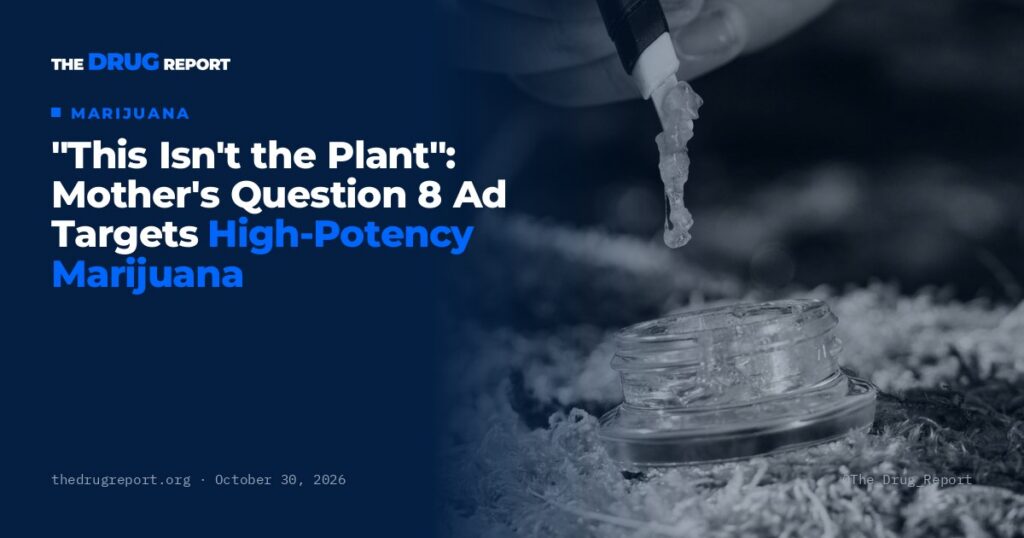
A grieving Massachusetts mother is the face of the newest Question 8 ad, and her target is high-potency marijuana.
“Our son became deeply addicted to today’s high-potency marijuana, and one day he paid the ultimate price,” Paula Santos-Young says in the 30-second spot from the Coalition for a Healthy Massachusetts.
From there, the ad turns from one family to the whole market. “This isn’t the plant that voters legalized a decade ago,” she says.
Politicians, she says, let corporations flood the state with concentrates of up to 90 percent potency. She calls it “a destructive corporate multi-state industry targeting our kids.”
Get stories like this every Friday
The week's drug policy news in one email, every claim sourced. Join tens of thousands of readers.
The closing ask is short. “Question 8 bans predatory recreational stores but keeps medical marijuana. Fix the law. Vote yes on Question 8.”
What High-Potency Marijuana Looks Like Today
The 90 percent figure matches what regulators in other legal states tell consumers. Colorado’s official cannabis site warns that concentrates such as wax, shatter and dabs “may contain up to 90% THC.”
Researchers found the same thing on dispensary shelves. In a 2020 JAMA Psychiatry study, University of Colorado participants bought legal concentrates of 70 or 90 percent THC. The flower in the study ran 16 to 24 percent. Concentrate users ended up with more than twice as much THC in their blood.
These products sell in Massachusetts too. A 2021 Cannabis Control Commission report found vapes and concentrates made up 35 percent of adult-use sales in December 2018 and about 25 percent two years later.
The same report said high-THC products are generally tied to higher risks of mental and behavioral problems. Still, the commission called the evidence incomplete and declined to recommend a potency cap.
The Addiction Risk of High-Potency Cannabis
The addiction claim at the heart of the ad has research behind it. A 2022 systematic review in The Lancet Psychiatry pooled 20 studies. It linked higher-potency cannabis to an increased risk of cannabis use disorder and psychosis.
“People who use higher potency cannabis could be at increased risks of addiction,” lead author Kat Petrilli of the University of Bath said when the review came out.
Colorado’s guidance makes the youth point directly. Young people who use high-THC cannabis are more likely to keep using it and to develop mental health problems later, the state says.
A Personal Question 8 Ad for the Final Stretch
The spot follows the coalition’s “Drugged Driving” ad, which centered on THC in fatal crashes. It also lands after state hospital data showed children’s ER visits for cannabis intoxication rose up to sevenfold after legal sales began.
Under Question 8, adults 21 and older could still possess up to an ounce, and medical marijuana would stay legal. Licensed recreational shops could apply to become medical dispensaries. The measure would also end home cultivation.
Voters decide November 3.
The Drug Report is a publication of Smart Approaches to Marijuana and the Foundation for Drug Policy Solutions.
Get The Drug Report every Friday
One free email every Friday: the week's drug policy news, sourced and explained. Read by tens of thousands of people who write, enforce and cover the policy. Unsubscribe anytime.