
Charles Fain Lehman: A Closer Look at the War on Drugs
On High Stakes, Kevin Sabet revisits Lehman's argument that the drug war deserves a fairer place in history.
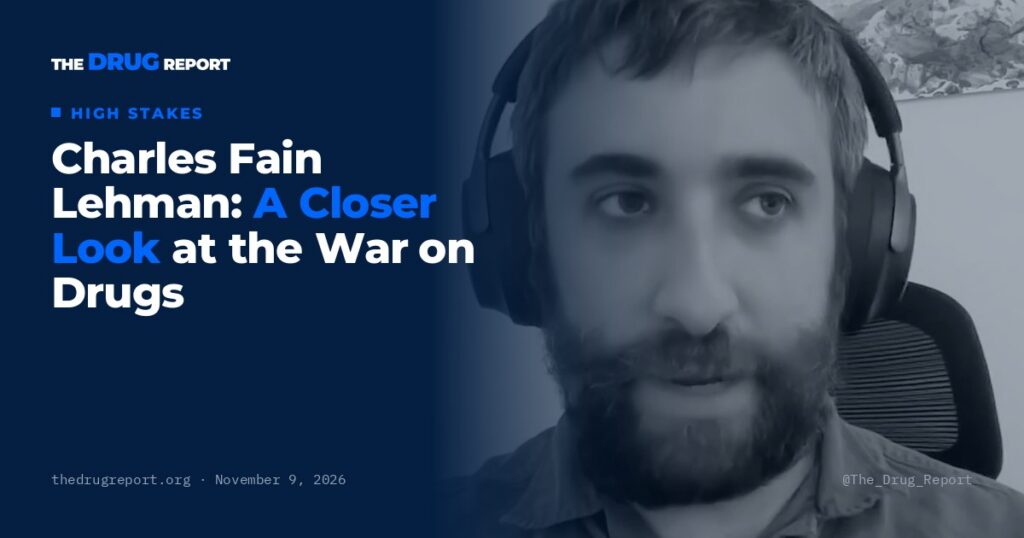
Most Americans remember the war on drugs as a racist, destructive failure. Charles Fain Lehman thinks that memory is wrong, and he says so plainly.
On the newest episode of High Stakes with Kevin Sabet, Sabet read back a passage from Lehman’s 2025 essay series, “What Was the War on Drugs?” Lehman, a senior fellow at the Manhattan Institute and senior editor of City Journal, wrote that the drug war “does not deserve its reputation as a destructive, racist failure.”
“It deserves to be better remembered, in part because of what it was: a popular backlash against serious, community-wrecking problems with drugs that arose in the ’70s and ’80s,” Lehman wrote. “That same backlash probably substantially reduced the number of people using drugs.”
What the war on drugs actually did
Lehman does not claim victory. He concedes the effort stalled in its push for a “drug-free America.” But he argues that falling short of its biggest goal “is still a far weaker criticism than those so often leveled against it.”
Get stories like this every Friday
The week's drug policy news in one email, every claim sourced. Join tens of thousands of readers.
The data in his series back up the first half of that story. Citing Monitoring the Future, Lehman notes that the share of high school seniors using any illicit drug peaked at 54 percent in 1979 and fell to 27 percent by 1992. Federal estimates he cites show adult illicit drug users dropping from about 25 million to about 12 million over the same stretch.
He also takes on the claim that the drug war built mass incarceration. Drug offenders peaked at about 22 percent of state prisoners in 1990, he writes, and account for about 13 percent today.
The gains did not last. By 1997, 42 percent of high school seniors reported illicit drug use. Lehman argues that policing alone struggles to cut demand for addictive drugs.
Why the war on drugs story still matters
Lehman’s real target is the political argument built on the drug war’s memory. “Demonizing the drug war has long been a key weapon in the arsenal of liberalizers,” he wrote.
Legalization advocates often present the war on drugs as the only alternative to their agenda. Lehman’s answer is to call it what he believes it was: “a noble and reasonable, if fundamentally flawed, experiment.” Seen that way, he wrote, the weapon “should lose some of its power.”
Lehman and Sabet have teamed up before, co-authoring a Washington Post op-ed on new data undercutting the case for so-called “safe” injection sites.
Lehman is not calling for a rerun. “The future of American drug culture isn’t, and shouldn’t be, a new war on drugs,” he wrote. “But it shouldn’t be a rejection of its ethos either.”
Get The Drug Report every Friday
One free email every Friday: the week's drug policy news, sourced and explained. Read by tens of thousands of people who write, enforce and cover the policy. Unsubscribe anytime.