
Cat’s Claw, Known as “Kratom in Disguise,” Emerges as a Threat to Communities
State officials throughout the country have issued warnings about “cat’s claw,” an herbal supplement known to contain kratom. In September,…

State officials throughout the country have issued warnings about “cat’s claw,” an herbal supplement known to contain kratom.
In September, the Tennessee Bureau of Investigations issued a warning on Facebook about “an increase in products being labeled as ‘Cat’s Claw’ that, in reality, contain MGM-15, a compound made from Kratom.” The Facebook post included images of these products:
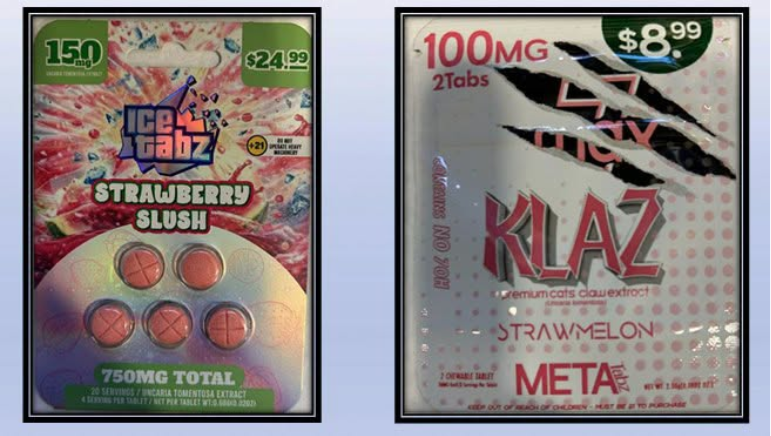
Source: Tennessee Bureau of Investigations
Mark Delaney, a special agent overseeing the Tennessee Dangerous Drugs Task Force, called cat’s claw “kratom in disguise.”
Get stories like this every Friday
The week's drug policy news in one email, every claim sourced. Join tens of thousands of readers.
The federal National Center for Complementary and Integrative Health noted that cat’s claw is a woody vine that grows in the Amazon rainforest and tropical areas in Latin America. The agency explained that “there’s no conclusive scientific evidence based on studies in people that supports using cat’s claw for any health purpose.” As an herbal supplement, cat’s claw is not approved or regulated by the Food and Drug Administration.
Following the implementation of Tennessee’s ban on kratom, the Warren County Prevention Coalition warned that cat’s claw emerged as a replacement, often in products branded as “Buzzers.” They said, “there is no reason a legitimate cat’s claw supplement would be sold as a flavored chewable tablet at a smoke shop register — in the exact spot where kratom used to sit.”
4 Leaf Herbals, a Florida-based kratom retailer, conducted a review of cat’s claw regulations and concluded that there is “no blanket U.S. federal or state controlled-substance ban on cat’s claw.” This has allowed for the proliferation of these products throughout the nation. In turn, the Viriginia Department of Health warned that cat’s claw products are being sold in gas stations, convenience stores, vape shops, and online––the same places where kratom is often sold.
In October, health officials in Utah warned that products containing semi-synthetic kratom compounds “are misleadingly labeled as containing ‘cat’s claw’ or its scientific name Uncaria tomentosa.” They added that four deaths in the state had been linked to these products.
Dr. Michael Moss, the medical director of the Utah Poison Control Center, told NBC, “these cat’s claw products contain dangerous opioids derived from kratom,” adding that “no one should take these products, retailers should not sell them, and healthcare providers should be aware of potential for addiction, withdrawal, and overdose related to their use.”
Similarly, in October, the Washington Poison Center warned that cat’s claw products were being “laced with highly concentrated chemicals related to kratom.” The warning added that poison centers throughout the nation have been treating patients who have taken Cat’s Claw products. Virginia’s Blue Ridge Poison Center has also warned about kratom-infused cat’s claw products.
Get The Drug Report every Friday
One free email every Friday: the week's drug policy news, sourced and explained. Read by tens of thousands of people who write, enforce and cover the policy. Unsubscribe anytime.